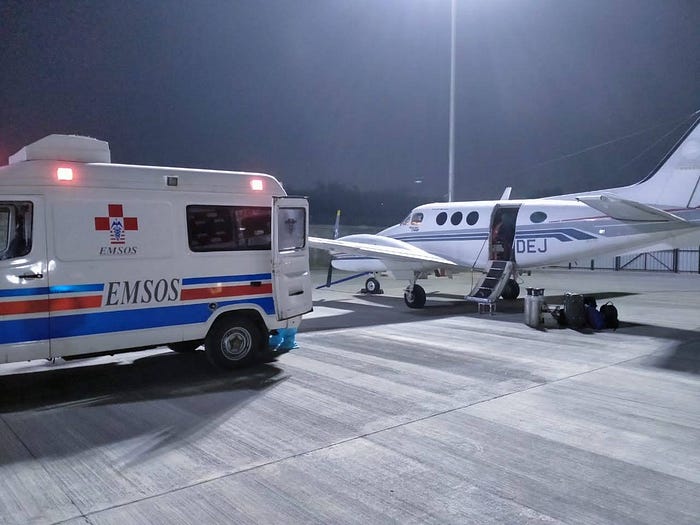
India’s healthcare system is entering a new era — one in which speed, technology, and advanced coordination will determine how efficiently patients receive critical care. As medical needs grow more complex and the distance between hospitals widens, medical mobility is becoming one of the most transformative pillars of emergency healthcare. What once relied heavily on road ambulances is now expanding into a sophisticated network of air transfers, rapid-response teams, telemedical guidance, and intelligent transport systems.
The next decade promises a healthcare shift unlike anything India has seen before.
A New Ecosystem of Fast, Integrated Patient Transport
For years, patient mobility in India largely depended on ground ambulances. But with rising traffic congestion, treatment delays, and demand for specialised care, the system is evolving rapidly. The future belongs to a mobility model in which air ambulances, medical escort teams, and digital triage platforms work together as a connected chain.
The change is already visible in major cities, but soon even remote and underserved regions will have access to fast evacuation pathways.
AI Will Redefine Emergency Decision-Making
Artificial intelligence will soon play a central role in guiding emergency teams. Advanced medical mobility systems will use:
- AI-driven triage to predict the severity of a patient’s condition
- Automated routing systems to shorten transport time
- Innovative monitoring tools that detect real-time deterioration
- Predictive models that suggest the best hospital for each case
With these tools, response teams will make quicker, more accurate decisions — especially in situations like strokes, cardiac events, neonatal emergencies, or multi-organ trauma.
Smarter Aircraft for Medical Evacuations
The future of air medical transport in India involves more than just faster aircraft. It includes specialised medical configurations designed exclusively for patient care:
- Upgraded ICU modules with advanced ventilators and monitoring tools
- Neonatal interiors dedicated to incubators and pediatric ventilation
- Radiation-shielded zones for sensitive medical equipment
- AI-assisted cockpit navigation to reduce delays during critical flights
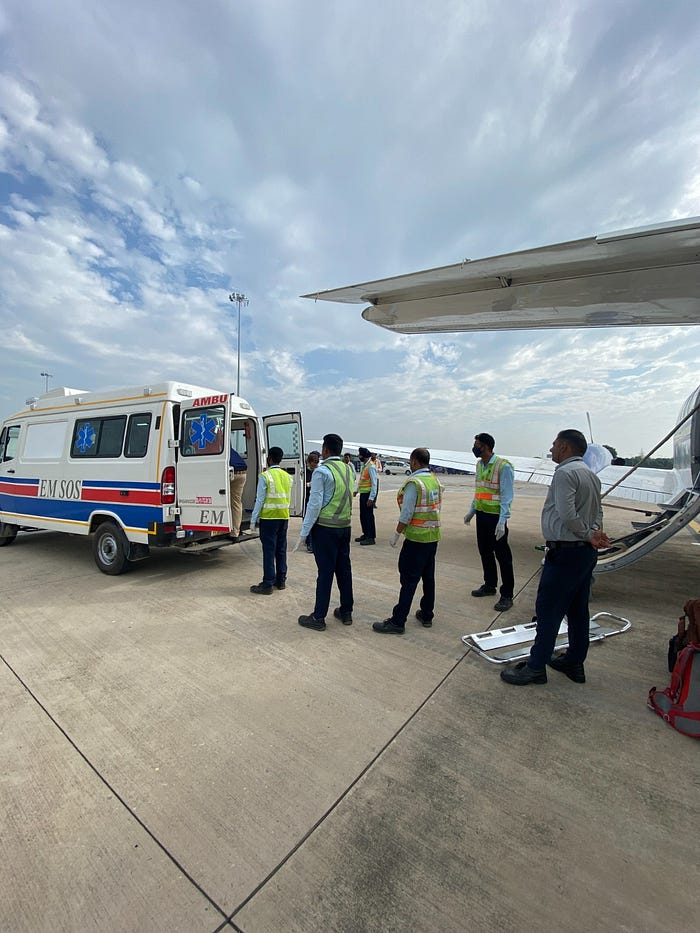
These improvements will make long-distance and international medical repatriation smoother, safer, and more efficient.
 |
Strengthening Medical Corridors Across India
As super-speciality hospitals expand, India will see the rise of dedicated medical corridors — routes specifically designed to connect regions lacking advanced care with major treatment hubs. This will help bridge the gap for:
- Mountain and high-altitude areas
- Coastal and island regions
- Tier-II and Tier-III cities
- Rural districts with limited critical-care infrastructure
Fast connections between these zones and metro hospitals will dramatically improve survival rates in time-sensitive cases.
Telemedicine Will Support Transfers in Real Time
Telemedicine will not replace emergency care — but it will empower it. Remote specialists will soon be able to:
- Guide paramedics during transport
- Monitor a patient’s vital signs in real time during an air transfer.
- Assist with stabilisation protocols before boarding.
- Offer instant medical advice for cross-border cases.
This hybrid model ensures that every patient, even in transit, is supported by experts regardless of physical distance.
More Accessible and Organised Medical Evacuation Networks
Government policies, private healthcare coordination, and technological investments will make medical mobility more accessible. Features like unified emergency numbers, centralised air ambulance approval systems, and digital hospital communication platforms will reduce delays and make the overall process smoother for families.
As the ecosystem matures, families will see:
- Faster evacuation readiness
- Transparent pricing structures
- Better insurance coverage
- Higher safety standards
- Nationwide medical transfer protocols
This shift marks the beginning of a more predictable and patient-friendly emergency system.
View More : https://www.emsos.in/
